Tuesday, August 20, 2013

Sponsor a Teacher!


Thanks to all who donated a Something Beautiful book
for our August training!  The teachers loved them!


With the August teacher training just recently behind us, Bethany, Melissa, and I are already planning the next training for October.  We will have the same teacher-participants from the previous training and will build off of skills from that week.  We are still in the process of deciding the theme of the training, but we know the Sudanese teachers will be enthusiastic and will rise to every challenge we place before them.  This is undoubtedly the most interactive and thoughtful group we’ve had to date!  

To ensure that we will have the proper supplies and resources for each of our teachers this fall, the educational ministry in Mundri is setting up a sponsorship program for each participant.  Join us in helping a South Sudanese teacher attend our upcoming training! 


Teachers to Sponsor:

Lextion Ruba (back row, far left): Lextion teaches at Lendrewa Primary School.  He is one of the more shy students and is less confident with his English, but he is always brave to raise his hand and give an answer (particularly when reviewing vocabulary).  Unfortunately, he did not get to receive his certificate on the final day of training, because he was stung by a scorpion that morning!  (Oh, the things that cause a sick day in Africa…)  

Rachel Yunia (back row, blue dress): Rachel teaches Arabic at Mundri II.  She is a pro at the language and can even write in it!  She was one of the more quiet students, always sitting back and observing while the others chattered away.

Mashiri Aggrey (back row, yellow shirt):  Mashiri has much experience in education, having lived in Khartoum and Juba.  He towered over the other teachers and was aptly given the nickname “big fish” after his role in a class drama.  I was grateful for all of his insightful comments during group discussions throughout the week.  He is currently headmaster at Okari Primary School, which is struggling to maintain a strong student population. 

Julius Nbatala Nyere (back row, black shirt): Julius teaches at Gullu I Primary.  He is a math teacher and a bonafide riddle king.  He was the first to answer many of the “brain teasers” we put on the board throughout the week.  He understands the importance of having students use problem solving skills in a real world context. 

Victoria Mayiba Enosa (back row, purple dress):  Victoria teaches Nursery at Gyanga Primary School.  She was an extremely attentive student and sat in the front row with her bff Nabeita. 

Nebeita Dawa Eliaba (back row, green headdress):  Nebeita teaches Nursery at Miri Magya Primary School.  She is undoubtedly the classclown, with her dry sense of humor and tall, lanky body that is usually standing at the front of the classroom, performing in dramas and demonstrations. 

Linda Nichol Yofam (front row, white T-shirt):  Linda is another well-experienced teacher who was so kind as to indulge us crazy kawajas in our planned group activities and games.  She teaches at Gyanga Primary School.

Mary Nadi Wilson (front row, green dress):  This group of participants had a lot of overachievers, but Mary Nadi takes the cake!  She was always one of the first to volunteer, provide an answer, read in English, and speak during closing ceremonies.  She loves catchy visuals, and I have seen them first hand in her nursery class at Mundri II.  Off the record, she is this teacher’s pet. 

Linda Malia Otiniel (front row, pink shirt):  Linda, like Mary, was another strong returning participant who teaches nursery school.  She was a hard worker and even had to cut out of our workshops early each day to power walk over to her afternoon classes. She teaches at Hai Malakal Primary.

Cecilia Enaba Gadi (front row, black and white dress):  Cecilia was a new participant who impressed me more and more as the week went on.  She had great English skills and was noticeably focused during each lesson, soaking up as much new information as possible. She teaches at Mundri Adventist Primary School.

John Samuel Manya (front row, striped shirt):  John was the youngest of the group.  He volunteers at Jarangala Primary School and has the least experience out of the participants.  He surprised me with his strong memory for facts and vocabulary, and was good to always raise a hand during daily review, despite his shyness and English speaking difficulties.       

Elizabeth Silivan (front row, black shirt):  It was a joy to teach each day and see her bright face smiling from the back of the classroom.  She impressed us all on the final day of training when she presented her own model lesson incorporating graphic organizers like we had discussed earlier in the week!  Talk about applying what you’ve learned!  She teaches at Miri Kalanga Primary. 

Alison Aboud Kayanga (front row, blue shirt):  This man really gave some spice to the week, freely sharing his opinions, thoughtful ideas, and wise-guy comments.  The best thing about Alison is that, despite all of his experience, he doesn’t take himself too seriously.  I’d love to see this man in the classroom.  He teaches at Hai Malakal Primary. 

Jesselina Kyila Patrick (front row, gold dress):  Jesselina was another one of our super-sweet, hard-working, ever polite, nursery school teachers.  She had a quiet demeanor, but showed intense focus and concern for education.  She teaches at Baya Primary.    


The cost to put one of these teachers through a week-long training is $50.  To give, go to S. Sudan Edu. Fund and leave a comment about which particular teacher you'd like to sponsor.  Thank you so much for your generosity!


Thursday, July 25, 2013

Jibu


jibu: give

It is difficult for me to say “no.”  It is especially hard to say “no” to someone in Africa. It seems sinister to deny anything to a dirty, underfed child, who looks up at you with the biggest, darkest eyes.  The same thing goes with that tired, elderly man, who teaches a class of seventy students and tells you that he doesn’t even receive chalk from the government.  There is also my friend, the young woman who works so very hard to provide for her family and is asking me for the second time this week to buy her some nice bangles like the ones I’m wearing.  Everyday I’m confronted with requests from Sudanese people.  Some people are easier to deny, like the intoxicated men in town who ask for my phone number, or the aggressive teens who tell me to give them my bicycle.  However, most of the time, the requests seem quite sensible, even urgent.  The greatest problem as a kawaja in South Sudan is figuring out which things to say, “yes” to, and which things to deny, despite my breaking heart.  I think to myself, “There has to be a way for me to give to each person here in Mundri...” 

Most days, if you spend enough time in the team house, you will hear the meek calling of, “Mi kado?” or “salaam.” If you look out the window, chances are, you won’t see anyone. You will have to open the creaky door and look down to see some pint-sized children clustered together with eager eyes and open hands.  “afasaat?...” (trash) they inquire.   They have walked from their homes in search of any trash that could be of use to them.  Empty bottles, used bags, and broken electronics/kitchenware are hot items.  They will take almost anything, and once they’ve had success, they’ll share the name of their source with the rest of the Mundri child population.  To control this onslaught of children, who come in pursuit of some plastic treasure, the team has limited distribution to Friday mornings; now children know to show up only at this allotted time.  However, we sometimes get the persistent ones who come at all hours of the day, any day of the week.  They stand by the door, peer up through the windows, hover near the entrance of the compound, staring at our every move.  It can drive my nerves to their limit when I’m trying to write a lesson plan with a group of children staring at me, asking me to give them anything their eyes come across.  “Jibu le ana waraga, galaam, gufa, kubaiya, gumash, jena...”  My “elf on the shelf” doll is a particularly prized item that kids quickly pick out through the screen door.  We as a team have so much more than we need and I become embarrassed that I have to say no to a kid who has next to nothing.  To make things more difficult—I LOVE giving gifts to people.  Every time I travel somewhere new I scour out the hidden shops to find that perfect gift for a friend or family member.  It takes my best self-control to not show up on Fatna’s compound each Monday with a small gift like a book or nail polish.  I will make baked goods for any person and any occasion.  I understand the implications of giving to African friends without thinking.  It complicates relationships among Sudanese neighbors when ex-pats choose to give certain things to only certain people.   However, I still find myself asking, “How can I show I care to my Moru friends?”  I am slowly learning what it means to give of myself, and it is much harder than handing over a neatly wrapped gift.

In African culture, time means love.  Spending the day sitting with the ladies, picking the leaves off the morenga branches, and eating g-nut paste and cassava is love.  Attending both the joyful prayers for the new baby and also the mournful prayers of the deceased relative is love.  Taking time to stop and simply be with the Sudanese women here is a way to give to them.  This way of interaction is hard for my overachieving self.  I want to spend my day being “productive,” doing things that show results.  Unfortunately, doing something for the end result means that I’m only thinking about my own pride.  Many days I have to set aside the watch and calendar, lather on the sunscreen, and head out to a friend’s house for an untimed hangout session.      

When working with teens, I’m often tempted to give gifts in order to gain favor in their eyes.  However, I’ve been trying to step away from the desire to be liked and work towards simply giving of myself.  I act as unofficial drama coordinator at my church, recruiting youth, directing the staging, and corralling the actors together at the time of the performance.  At times, actors don’t show up, groups of teens talk through the church service, and lead characters decide they don’t want to speak above a whisper.  It looks like chaos to an outside observer, but, to me, it is a way to give to some otherwise disinterested adolescents. 

My favorite way to give here in Mundri is to share knowledge.  The schools here in South Sudan have so little and face so much that I jump at any opportunity to hold workshops for drained and underprepared teachers.  At the beginning of teacher trainings we do give each participant a bag of school supplies; however, the rest of the week we are filling the teachers’ hearts with confidence—confidence that they can speak in English, confidence that that they can plan creative lessons, confidence that they do the task the Lord has set them to do, because He will sustain them.  It is the most tiring, emotionally draining week of the year for me, and it is totally worth it.    

My pride is hurt by the reality that I’m not the most cheerful giver.  Some days I don’t want to teach the lesson, I can’t bring myself to enter into that long conversation in Arabic, I feel frustrated with the culture and the individuals with whom I’ve chosen to surround myself.  It would be much easier to just drop off a bag of cookies at someone’s hut and say, “salaam.”  But God calls me to give in a way that dies to my comfort level.  Paul reminds us to, 
“Be imitators of God…and live a life of love, just as Christ loved us 
and gave himself up for us as a fragrant offering and sacrifice to God.” –Eph. 5:1,2

When I think of the ultimate gift of a life for a soul, I’m compelled to give of menial things like my time, energy, and mind (which I tend to hold with an iron fist, regardless of the fact that they already belong to the Lord).  Yes, I am learning what it means to “give” here in Africa—not because I’m some sort of martyr, but because my God prods me, teaches me, and emboldens me all along the way. 

Each man should give what he has decided in his heart to give, 
not reluctantly or under compulsion, for God loves a cheerful giver.
-2 Cor. 9:7

Saturday, July 20, 2013

Freedom


Last week I had the privilege of celebrating the independence days of both the United States and South Sudan.  Eager to get back to my usual team duties, as soon as I got off the mini MAF plane and unloaded my trunks of supplies, I headed over to the team house to adorn its walls with star cut outs, mini flags, and glittery signs.  I’m a bit rusty in the holiday décor department, but the effort was there.  Amidst all of my gluing, drawing, and cutting, I thought more carefully about what freedom really means.  I think it’s easy to take Independence Day as one of the more lame holidays that gives people a chance to eat meat and watermelon and watch fireworks.  I’ll admit it’s at the bottom of my list.  However, returning to Africa during this season has made me vastly more patriotic than I’ve ever been. America, despite all its bravado and self-indulgence, is a great country of diversity and opportunity.  It is also a country that has learned, in a relatively short amount of time, how to get things done.  It has its weak points, its areas of oversight and immorality, as every human nation does; however, it is a safe country, an energetic and driven country.  I’m still not at the point of putting patriotic bumper stickers on my car, but I am grateful to live in the United States, where freedom is known. 

Freedom is also an important idea for the people of South Sudan.  The people in Mundri are always saying, “feel free,” when I come to visit them.  They want me to feel at home, feel like I can join their conversations and eat to my heart’s content.  Formality is a sign of distance here—to take off your shoes, lie back, and talk about the current health of your mother’s sister is to take a step towards the Moru people in freedom. 

Ironically, since being back in Mundri, I have not been able to feel a sense of freedom.  It has nothing to do with the gracious and hospitable people of South Sudan, but everything to do with my own insecurities.  I have been paralyzed by a fear of failure in my work here.  I have been nervous about meeting up with people who I haven’t seen in two months.  I have felt pressure to reach a certain level of productivity that I never seem to achieve.  And, worst of all, I have not felt the freedom to approach God with all of my fears and worries.  I tell myself, “This is just who you are.  You are an anxious, fearful person, and there’s nothing you can do to change who you are.”  I’m giving sin too much power—letting it shackle me to the ground in helplessness and self-pity without even considering the love and power of God. 

My team is studying Ephesians, which has been encouraging my heart about the truths of freedom in Christ Jesus.  Paul writes,

            In Him and through faith in him we may approach God with freedom and confidence.  I ask 
            you, therefore, not to be discouraged because of my sufferings for you, which are your glory.  
           - (Eph. 3:12,13)

It is difficult to give myself the freedom to make mistakes, to be my own imperfect self.  I want to do big things here in Mundri, but I need to be sure it is for God’s glory and not my own.  Luckily, I have the Moru people here to encourage me to “feel free.”  There are the South Sudanese teachers, who thank me profusely for sharing my model lesson with them, even though I feel like my lesson bombed.  There’s Agnes, who hugs me and holds onto me for a good five minutes after having not seen me for nine months.  There’s Panina, the Ugandan owner of the town fashion store, who would rather have me chatting with her about life than buying up all of her consignment shirts.  There are the professors and students at Kotobi Teacher’s College, who invite me to all of their ceremonies and programs—even when I’m not currently teaching there.  There’s the Bishop, who gives John and me his blessing and prayers when we fearfully tell him that we want to pursue a “dating” relationship in a conservative culture.  And there’s neighbor Howa, who drops the water bucket she’s been carrying and runs up to hug me.  These friends all teach me daily what it looks like to freely love and accept me as I am.  I am so grateful for them.  

The people of South Sudan don’t have the resources or opportunities that the people of America have.  Most were born here in Mundri Town, Western Equatoria, and they will die here.  It is easy to feel weighed down in a developing nation; however the Moru people chose to live life in freedom.  They have their own nation, separate from the Arab-dominated North.  They have fertile land to use as they wish—to plant clusters of g-nuts and rows of tall maize and construct mud homes for their growing families, with the sweeping blue sky in the background.  Most importantly, they have freedom in Christ.  They feel the freedom try things that may fail, knowing that they are still loved by their community and by their God just the same.  


The spirit of the Lord God is upon me, for he has anointed me
to bring good news to the poor;
he has sent me to bind up the brokenhearted,
to proclaim liberty to the captives,
and the opening of the prison to those who are bound.
-Isaiah 61:1

Monday, June 24, 2013

Calling All Givers!


     It is hard to believe that I am almost done with my month in the United States.  During this final week, I am quite busy running errands and taking care of business before returning to good old S. Sudan.  Amidst the hustle and bustle, I've been trying to reflect on the past year, to think back on the good, the bad, and the ugly of life in Mundri Town.  This month in America is supposed to fuel much comparison and criticism of both my home culture, the culture of South Sudan, and even my mission's culture.  I should be thinking about what in each culture is right, what is wrong, and what is just "different."  I should be thinking of ways to address the entanglement of problems in South Sudan and set up a game plan of how I will pursue people and work in my various ministries.  I've been doing this to some extent; however, once I start thinking about Mundri, I end up being filled with excitement over all the wonderful experiences I've had this past year.  I compiled a list of my top 10 experiences.  Here they are, in no particular order:


- Running along the dusty road of Mundri town, looking out toward the expansive sky, and watching the sun rise
- Pretending to be a scary snake in the youth drama I helped direct with the teens at my church
- Hiding out in Mary’s tukul while a violent thunderstorm took over and poured rain through the grass roof (and then eating mangoes galore after the storm was all over!)
- Watching 2 dozen primary school teachers plan an interactive, creative lesson that they can be proud of and use with their students
- Getting to say “action” and “cut” with a film crew and actors…along the banks of the Moru river
-Talking and laughing among professors over the habits of “pusscats” and rats at Kotobi Teacher’s College
- Building a sand resort/town with Gaby and Liana at MyIsland.
- White water rafting on the Nile!
- Making American baked goods with some spirited and open-minded teenage girls  
- Getting to worship the same God each week with people who couldn’t be more culturally different from myself  


Honestly, I can't wait to return to Mundri Town, South Sudan.  I'm trying not to put all my hope in an overfilled agenda, in which everything goes according to my superior and master plan.  I've learned over the year that (and my pride bristles at the thought) the Lord is in control and will accomplish things His way.  I am merely there for the ride.  So I am waiting.  And praying. And hoping that in this upcoming year my passions and gifts will line up with what God has in store for me.  He has always been faithful.


FINANCIAL NEEDS FOR 2013-2014 

I am still in need of about $350 a month to meet my financial needs for the year.  If you are interested in being a part of this ministry in Mundri through your financial giving, go to the World Harvest website here!

You can also write out checks to World Harvest Mission with "Jennifer Disse" in the memo line.  You mail checks to the following address:
World Harvest Mission
Donations Processing Center
PO Box 1244 Albert Lea MN 56007

Thanks for caring!


Monday, April 29, 2013

Life in Technicolor


     I felt like Dorothy yesterday as I rode my bike through town.  Just days earlier, the world around me had been shaded in a sepia-toned haze.  The ground was a prickly grey of desiccated vegetation, while the sky remained shrouded in a dusty veil of brown.  South Sudan was both looking and feeling like the bleak, arid, landscape that sensational journalists have pinned it as.   

     And then, unexpectedly, while folding clothes or writing a letter one afternoon, the rain came.  It poured down upon Mundri, pounding roofs, flooding streets, and knocking mangos from trees and into the arms of smiling, drenched children.  Heavy branches bended and snapped, while leaves shook and flew about wildly.  When it was all over and the roaring downpour quieted to a pattering of raindrops, I stepped outside to survey the damage.  Heavy branches littered the muddy ground and water ran off in all directions.  The air blew a cool wind that could only remind me of England.  Grateful for cooler weather and an excuse to watch Bridget Jones’ Diary, I went on my way, forgetting about Mother Nature’s incessant and miraculous works.


     The following morning I went out to my running trail and saw a transformed earth.  What was once a dirt path was now a neon green jungle of twisted vines and broad leaves!  The nature that stood before me didn’t even look real—it was like I was thrust into an old technicolor film of the fifties, walking through overlapping colors that were all competing to shine through the brightest.  The trees on our compound were full again and were flowering white and red buds.  The pink and yellow flowers that Larissa had carefully planted were finally breaking through the dark soil.  Even in town, the color abounded.  At the market, stands overflowed with baskets full of orange mangos, which had ripened and fallen from the rain.  The aisle for selling bread was taken over by bunches of greens—so much so that one couldn’t even walk through that area without stepping on a cluster of earthy green goodness.  Splotches of bright patterns dotted the road in the distance, as women in long flowing wraps walked to their gardens to plant their seedlings for the year.  And the sky—oh the sky—it finally returned to its deep blue hue—the color that I would have only seen on a few lucky days in October back in the states.  Indeed, color had burst into Mundri along with the beginnings of rainy season, and I couldn’t have been happier.

     This sense of living in color has also seeped its way into those dark, discontented corners of my mind.  I’m always looking to the hypothetical future to get my hope, making plans of all the things I’m going to do.  I tend to view my daily schedule as a means to a greater end, failing to find the joy in the here and now, because my work here is seemingly unfinished, unpolished, or even unplanned.  In Africa, everything is messy at first glance, and it is easy to find myself saying, “When . . .  happens, then I’ll be satisfied.”  I’ve been experimenting with giving up control of my work here in S. Sudan (which has not been easy).  However, the pay off has been the joy of experiencing Africa in all of its colorful quirks.  Instead of grumbling over all the imperfections in the film John, Andrew, and I have made, I’ve simply enjoyed the fact that I have something creative to share with the people of Mundri.  I can sit in that stifling MAYA office and watch while sweaty children squeeze their way onto our laps to gawk at a real Mundri-made movie.  I can laugh when certain scenes get cut off or when our makeshift boom mic. lowers into a shot.  No one else is noticing.  I can laugh when I watch the finished product of the drama I have created with the teens at my church.  As they fumble over lines, break character, and get advice from noisy audience members, I can smile.  I can smile because they are having fun—I am having fun.  I’m slowly starting to learn how to relax, how to be more like a Moru person here in Mundri.  It is all about embracing the here and the now that God has blessed me with and seeing the worth of a messy, colorful life (as much as my heart tends to see things in black and white).   


"Forget the former things; do not dwell on the past. See, I am doing a new thing!
Now it springs up; do you not perceive it?
I am making a way in the wilderness and streams
in the wasteland." -Isaiah 43:18-19


Wednesday, April 17, 2013

Photo Finds: Marco Di Lauro


I was reading through Outside magazine yesterday, and I came across an article on South Sudan and the Mundari herding tribe.  As usual, I was mesmerized by the work of the photographer, Marco Di Lauro, so I thought I would share some of my favorites.   


Usually, Di Lauro works in the Middle East, covering the war, but I was glad he took the time to cover a part of the world that is so special to me.

Yei, S. Sudan

Yei, S. Sudan


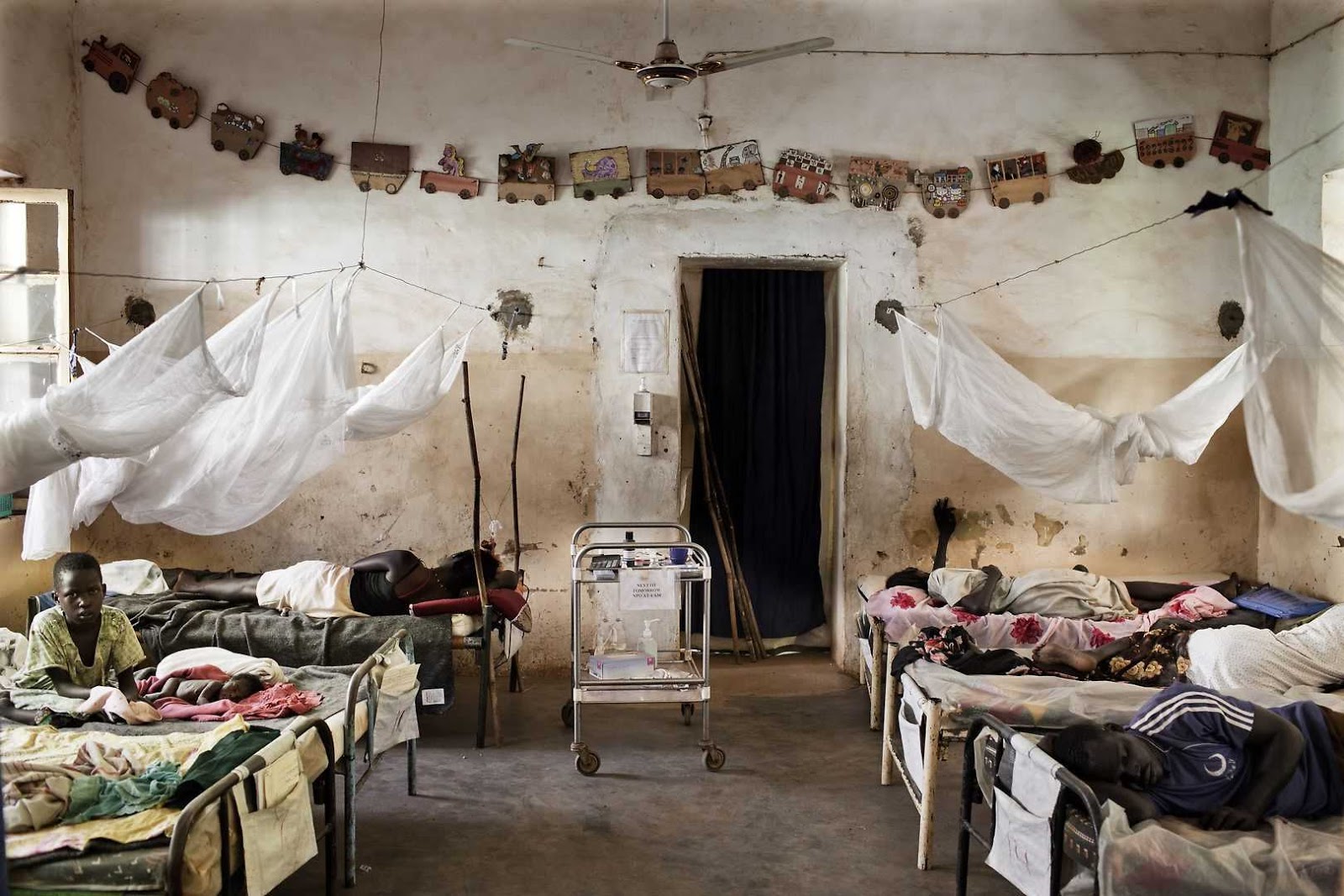
MSF hospital in Aweil, S. Sudan


Aweil, S. Sudan


Here are some non-South Sudan pics:


work for UNICEF
Yemen
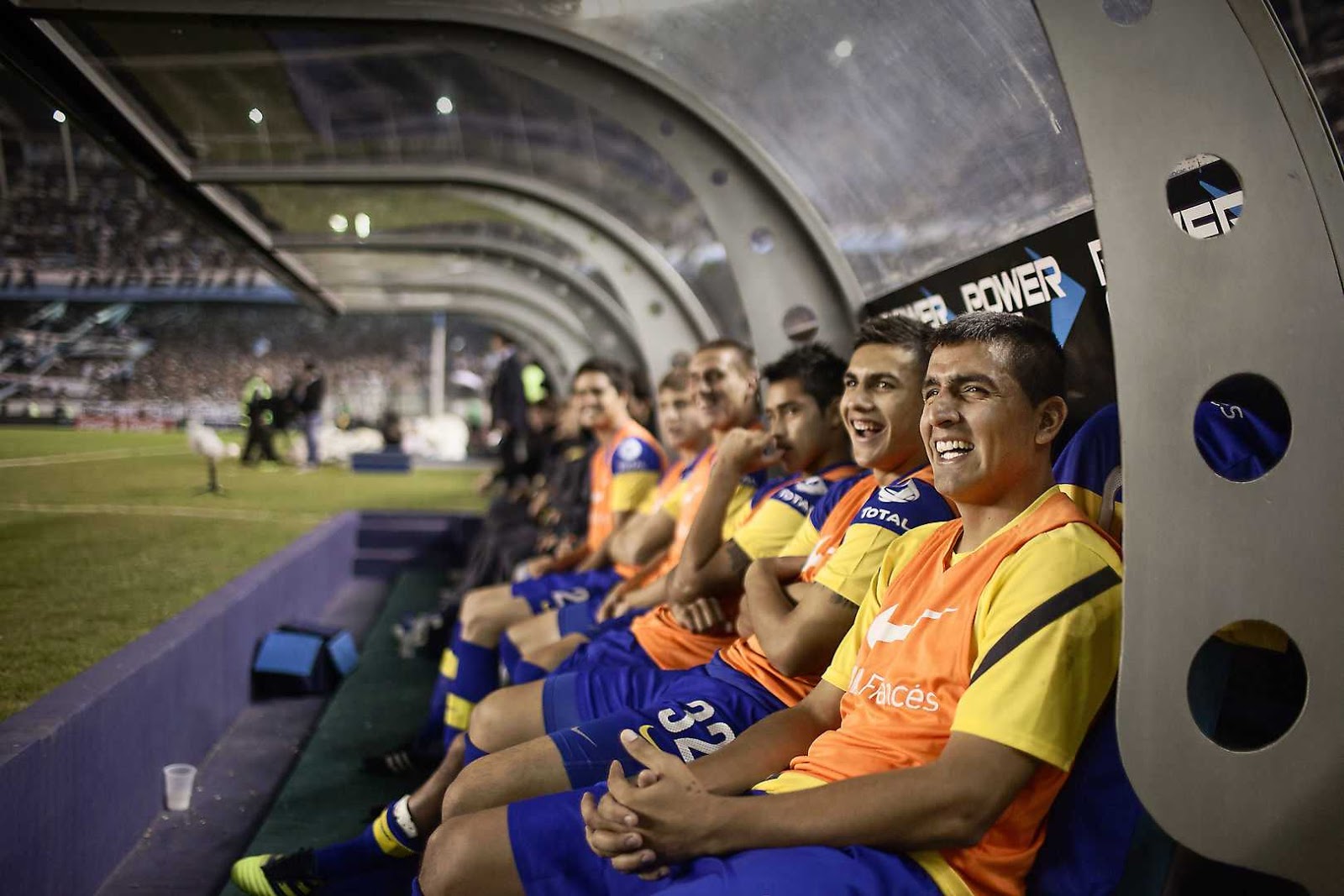
Argentina
Argentina
Afghanistan

Afghanistan
Chad


Monday, April 15, 2013

With the Foxes and the Birds


     People told me it would happen.  I had been warned and lectured and reminded on the matter; however, I still thought that I was above it all— the cliché emotional/relational burnout missionaries are supposed to feel.  In my pride, I thought I could be the exception and not feel it, not feel the sadness, the bitterness, the fatique from experiencing the relational revolving door that is missionary life. (Besides, with all of my Ingmar Bergman watching, Mary Gaitskill reading, and Trent Reznor listening I have built up something of a stony and unsentimental heart, right? . . .  I must have some superhuman reserves of apathy saved from late adolescence that can be used towards this stage in life?. . . )  These short-term solutions can only work through so many changes.   

     Other missionaries on my team have been telling me that (despite my stubborn refusal to feel) I would eventually reach I point in which I’d have nothing left to give—that I’d become exhausted from trying to adapt myself to a constantly changing family here in Mundri.  They were right.  I’ve found myself falling into the trap of determining my amount of investment in people based on how long I know they are going to be around.  The other day, the girls and I spotted another kawaja (white person) sitting outside at the Bishop’s house.  We stared over at her, debating whether or not we wanted to muster up the energy to be friendly and greet her.  Once we learned that she would leave in a day’s time we chuckled to ourselves and stayed indoors.  The thought of spending my small reserve of emotional energy on someone who would be gone the next day seemed ridiculous.  

     Maybe I sound antisocial, selfish, or even unkind.  However, I must say that relationships here in S. Sudan are not like those in the states.  One must recklessly hand over ones emotional, physical, and psychological well being to be a part of a trusting, functioning team in a foreign culture.  Whether someone is joining the ranks for one week or one year, all must give of themselves, trusting that God will replenish their emptied selves after that person goes off to another part of the globe.

     This transience exists in my relationships with my African friends, as well.  Friends move to a different city for work; they relocate to a family member’s village; they go to Uganda for school.  The reasons for mobility are endless.  You could spend all weekend visiting a Moru family, sleeping on their best bed, listening to the wild stories of their lives during the war, eating linya and greens until you think you’ll burst.  The next week you get a call that a distant aunt has died and this family is in transit yet again, praying to God for provision in the journey.    

     It is part of the cost of living this lifestyle.  Jesus moved all over Judea and Samaria, leaving friends and watching friends leave him.  He called his disciples to daily pick up their “crosses” and follow him, regardless of the painful consequences.  He reminds them, “Foxes have holes and birds of the air have nests, but the Son of God has no place to lay his head.” (Matt.8.20)  If I think I have a shifting life, I must take a look again at Jesus, whose closest friends fell asleep on him as he was sweating blood.  He was betrayed, captured, sacrificed, and even rejected by the God of the universe.  I am blessed.  Just as God remembers the little foxes and birds, He has more than remembered me.  God has given me warm (albeit, temporary) homes, both in Africa and in America.  He has showered me with a large family and various friends from all stages in my life.  And in those moments when I feel the heart-tug of goodbyes, He is there to comfort me. 

     God has been teaching me that it is okay to want to seek out a home in this wild world, to want people around who make me feel like me, who make me feel like a necessary part of the greater whole.  The key is in accepting that nothing in this world lasts.  I can finally admit my need for people—admit that I do grow attached and sentimental in my relationships.  Now, as I watch the small MAF plane disappear in the distance, I willingly search out the arm of a teammate to help stop the tears from coming.  I am learning to give up control of these places and people and seasons and days. . . as if I had any control to begin with.

“Therefore, everyone who hears these words of mine and puts them into practice is like a wise man who built his house on the rock.” - Matthew 7:24