Monday, April 29, 2013

Life in Technicolor


     I felt like Dorothy yesterday as I rode my bike through town.  Just days earlier, the world around me had been shaded in a sepia-toned haze.  The ground was a prickly grey of desiccated vegetation, while the sky remained shrouded in a dusty veil of brown.  South Sudan was both looking and feeling like the bleak, arid, landscape that sensational journalists have pinned it as.   

     And then, unexpectedly, while folding clothes or writing a letter one afternoon, the rain came.  It poured down upon Mundri, pounding roofs, flooding streets, and knocking mangos from trees and into the arms of smiling, drenched children.  Heavy branches bended and snapped, while leaves shook and flew about wildly.  When it was all over and the roaring downpour quieted to a pattering of raindrops, I stepped outside to survey the damage.  Heavy branches littered the muddy ground and water ran off in all directions.  The air blew a cool wind that could only remind me of England.  Grateful for cooler weather and an excuse to watch Bridget Jones’ Diary, I went on my way, forgetting about Mother Nature’s incessant and miraculous works.


     The following morning I went out to my running trail and saw a transformed earth.  What was once a dirt path was now a neon green jungle of twisted vines and broad leaves!  The nature that stood before me didn’t even look real—it was like I was thrust into an old technicolor film of the fifties, walking through overlapping colors that were all competing to shine through the brightest.  The trees on our compound were full again and were flowering white and red buds.  The pink and yellow flowers that Larissa had carefully planted were finally breaking through the dark soil.  Even in town, the color abounded.  At the market, stands overflowed with baskets full of orange mangos, which had ripened and fallen from the rain.  The aisle for selling bread was taken over by bunches of greens—so much so that one couldn’t even walk through that area without stepping on a cluster of earthy green goodness.  Splotches of bright patterns dotted the road in the distance, as women in long flowing wraps walked to their gardens to plant their seedlings for the year.  And the sky—oh the sky—it finally returned to its deep blue hue—the color that I would have only seen on a few lucky days in October back in the states.  Indeed, color had burst into Mundri along with the beginnings of rainy season, and I couldn’t have been happier.

     This sense of living in color has also seeped its way into those dark, discontented corners of my mind.  I’m always looking to the hypothetical future to get my hope, making plans of all the things I’m going to do.  I tend to view my daily schedule as a means to a greater end, failing to find the joy in the here and now, because my work here is seemingly unfinished, unpolished, or even unplanned.  In Africa, everything is messy at first glance, and it is easy to find myself saying, “When . . .  happens, then I’ll be satisfied.”  I’ve been experimenting with giving up control of my work here in S. Sudan (which has not been easy).  However, the pay off has been the joy of experiencing Africa in all of its colorful quirks.  Instead of grumbling over all the imperfections in the film John, Andrew, and I have made, I’ve simply enjoyed the fact that I have something creative to share with the people of Mundri.  I can sit in that stifling MAYA office and watch while sweaty children squeeze their way onto our laps to gawk at a real Mundri-made movie.  I can laugh when certain scenes get cut off or when our makeshift boom mic. lowers into a shot.  No one else is noticing.  I can laugh when I watch the finished product of the drama I have created with the teens at my church.  As they fumble over lines, break character, and get advice from noisy audience members, I can smile.  I can smile because they are having fun—I am having fun.  I’m slowly starting to learn how to relax, how to be more like a Moru person here in Mundri.  It is all about embracing the here and the now that God has blessed me with and seeing the worth of a messy, colorful life (as much as my heart tends to see things in black and white).   


"Forget the former things; do not dwell on the past. See, I am doing a new thing!
Now it springs up; do you not perceive it?
I am making a way in the wilderness and streams
in the wasteland." -Isaiah 43:18-19


Wednesday, April 17, 2013

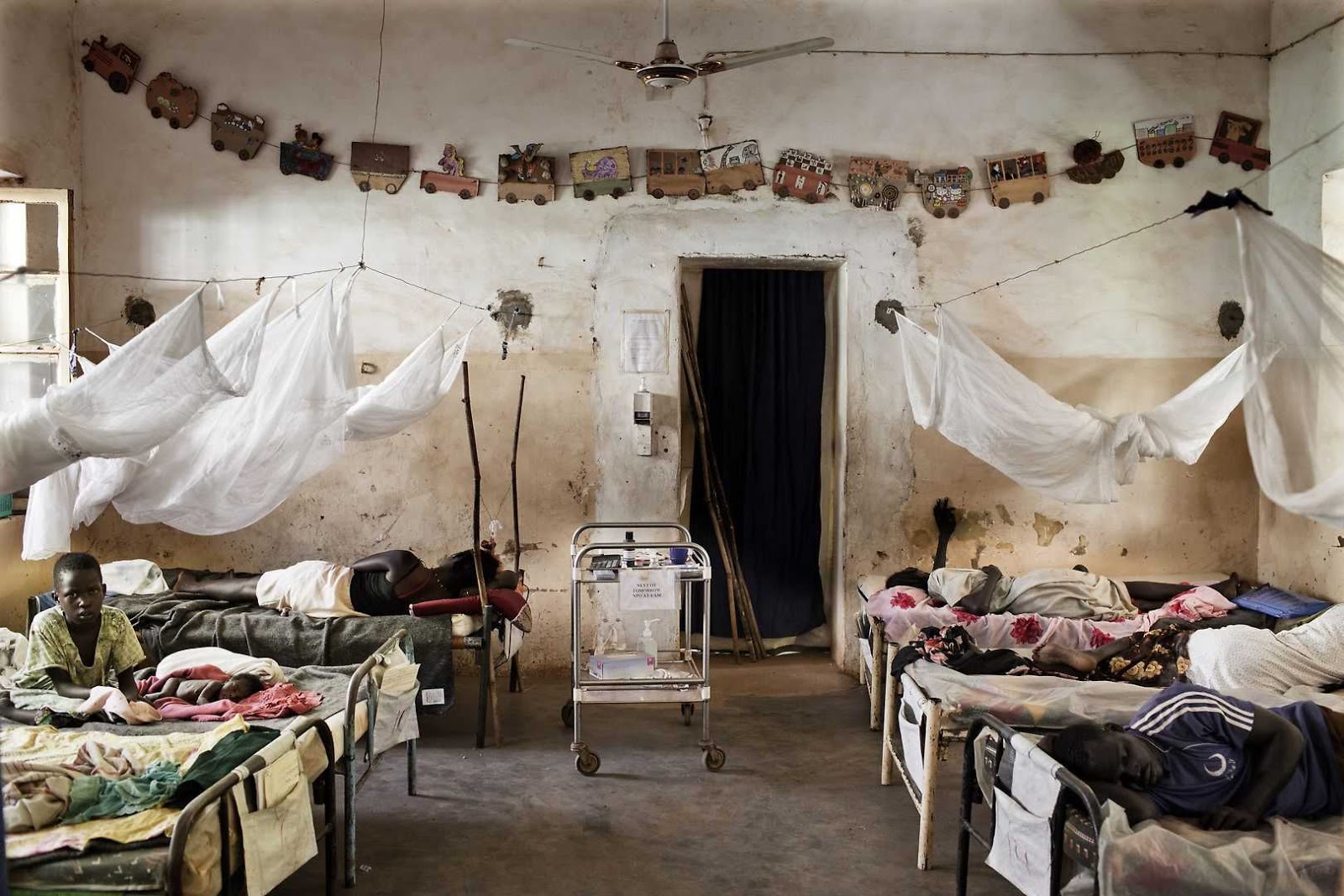
Photo Finds: Marco Di Lauro


I was reading through Outside magazine yesterday, and I came across an article on South Sudan and the Mundari herding tribe.  As usual, I was mesmerized by the work of the photographer, Marco Di Lauro, so I thought I would share some of my favorites.   


Usually, Di Lauro works in the Middle East, covering the war, but I was glad he took the time to cover a part of the world that is so special to me.

Yei, S. Sudan

Yei, S. Sudan


MSF hospital in Aweil, S. Sudan


Aweil, S. Sudan


Here are some non-South Sudan pics:


work for UNICEF
Yemen
Argentina
Argentina
Afghanistan

Afghanistan
Chad


Monday, April 15, 2013

With the Foxes and the Birds


     People told me it would happen.  I had been warned and lectured and reminded on the matter; however, I still thought that I was above it all— the cliché emotional/relational burnout missionaries are supposed to feel.  In my pride, I thought I could be the exception and not feel it, not feel the sadness, the bitterness, the fatique from experiencing the relational revolving door that is missionary life. (Besides, with all of my Ingmar Bergman watching, Mary Gaitskill reading, and Trent Reznor listening I have built up something of a stony and unsentimental heart, right? . . .  I must have some superhuman reserves of apathy saved from late adolescence that can be used towards this stage in life?. . . )  These short-term solutions can only work through so many changes.   

     Other missionaries on my team have been telling me that (despite my stubborn refusal to feel) I would eventually reach I point in which I’d have nothing left to give—that I’d become exhausted from trying to adapt myself to a constantly changing family here in Mundri.  They were right.  I’ve found myself falling into the trap of determining my amount of investment in people based on how long I know they are going to be around.  The other day, the girls and I spotted another kawaja (white person) sitting outside at the Bishop’s house.  We stared over at her, debating whether or not we wanted to muster up the energy to be friendly and greet her.  Once we learned that she would leave in a day’s time we chuckled to ourselves and stayed indoors.  The thought of spending my small reserve of emotional energy on someone who would be gone the next day seemed ridiculous.  

     Maybe I sound antisocial, selfish, or even unkind.  However, I must say that relationships here in S. Sudan are not like those in the states.  One must recklessly hand over ones emotional, physical, and psychological well being to be a part of a trusting, functioning team in a foreign culture.  Whether someone is joining the ranks for one week or one year, all must give of themselves, trusting that God will replenish their emptied selves after that person goes off to another part of the globe.

     This transience exists in my relationships with my African friends, as well.  Friends move to a different city for work; they relocate to a family member’s village; they go to Uganda for school.  The reasons for mobility are endless.  You could spend all weekend visiting a Moru family, sleeping on their best bed, listening to the wild stories of their lives during the war, eating linya and greens until you think you’ll burst.  The next week you get a call that a distant aunt has died and this family is in transit yet again, praying to God for provision in the journey.    

     It is part of the cost of living this lifestyle.  Jesus moved all over Judea and Samaria, leaving friends and watching friends leave him.  He called his disciples to daily pick up their “crosses” and follow him, regardless of the painful consequences.  He reminds them, “Foxes have holes and birds of the air have nests, but the Son of God has no place to lay his head.” (Matt.8.20)  If I think I have a shifting life, I must take a look again at Jesus, whose closest friends fell asleep on him as he was sweating blood.  He was betrayed, captured, sacrificed, and even rejected by the God of the universe.  I am blessed.  Just as God remembers the little foxes and birds, He has more than remembered me.  God has given me warm (albeit, temporary) homes, both in Africa and in America.  He has showered me with a large family and various friends from all stages in my life.  And in those moments when I feel the heart-tug of goodbyes, He is there to comfort me. 

     God has been teaching me that it is okay to want to seek out a home in this wild world, to want people around who make me feel like me, who make me feel like a necessary part of the greater whole.  The key is in accepting that nothing in this world lasts.  I can finally admit my need for people—admit that I do grow attached and sentimental in my relationships.  Now, as I watch the small MAF plane disappear in the distance, I willingly search out the arm of a teammate to help stop the tears from coming.  I am learning to give up control of these places and people and seasons and days. . . as if I had any control to begin with.

“Therefore, everyone who hears these words of mine and puts them into practice is like a wise man who built his house on the rock.” - Matthew 7:24

Friday, March 29, 2013

Planted by the Stream


About to do a relay race, demonstrating the steps in the water cycle
Last week I had the joy of facilitating the third and final phase of teacher training for over twenty local primary school teachers.  Teacher training is one of the top reasons why I joined this team here in Mundri, and I have been planning and looking forward to it like it was Christmas.  The theme for this training was “The Water of Life,” which gave Bethany, Melissa, and me ample opportunity to integrate spiritual truths into our science lessons.  It was also a chance to focus practically on one particular unit, giving the teachers visual aids, model lessons, and science knowledge that they could bring into their own classrooms in the future.  What fun!

One of the perks of this training was that we got to see the same teachers who had attended the past two trainings.  We knew their faces, their unique personalities, their biographies, their strengths and weaknesses—and we could adjust our training to best meet their needs.  This week gave me another chance to observe these hard working adults and make further comparisons between education in the states and education in S. Sudan. 

Just like teachers in the states, the teachers in Mundri want advice on classroom management, lesson planning, and student-teacher relationships.  They want to grow professionally and be a blessing to their many students.  However, the teachers in Mundri also have the unique responsibility of being the face of a new nation to their students.  There is so much that South Sudan is working towards, and these primary school teachers are the ones planting the proverbial seeds into the minds of the country’s future leaders.  These teachers are the ones encouraging young women to stay in school and not get pregnant.  They are responsible for setting high standards so their students know what they’re capable of.  Every day they are modeling respect, hard work, and Godly character.  On top of this, they are speaking to an audience of around eighty distracted children and are given very little financial recompense for their work.  It is a job that I admit I could not do, which is why I’m so passionate about encouraging these teachers whenever possible!     

One of the biggest surprises of teacher training is the amount I end up learning.  There’s nothing like a little bit of primary school lesson planning to remind you of your own ignorance in the most basic science facts.  Last week I was reminded again and again of how the water cycle is truly everywhere, how it is a miraculous gift from God. I also learned the importance of humor in relating to the people here in Mundri.  Whenever I felt myself distanced from the participants in the training, I would watch how they interacted with one another.  They would sit in groups, laughing at each other in love and good fun.  It seems fitting for them to make humor a priority, when they are otherwise burdened with the heaviness of life in S. Sudan.  These adults taught me that community and relationships are more important than my reputation or my agenda.    

The most painful lesson I learned during this week was the reality that all my emotional baggage as a teacher has not been left behind in the states; I have brought it right here with me to Mundri and must learn to battle it appropriately.  Despite all of my joy in working this teacher training, I became hit with paralyzing anxiety, which put a dark cloud over the whole week.  I let myself believe that I had nothing to offer these teachers; that I should pack up my detailed lesson materials and visual aids and go home.  To stand up in front of the Sudanese participants and speak with conviction felt like a million little deaths, like a Herculean feat attempted by a mere mortal. But I stood up at the front of the classroom and, surely enough, God made learning happen.  Words came out of my mouth, the teachers earnestly listened, and connections were made.  Teachers even came back into the room early from lunch to finish copying what I had written on the board (in my ever shaky handwriting).  Praise God for reminding me again of His power in light of my weakness. 

On the final day of training we had a closing ceremony and gave out certificates of completion.  Just like the previous training, I got sentimental and started to wish the training would last another week.  The humor, passion, and humility in all of the teachers present had been such an encouragement to my anxious, striving self.  Their faith to go boldly into the classroom was a reminder of the power of the “living water” in even the driest of places.  I had failed to believe the very Biblical truth that this training was centered around.  It is my continued prayer, for myself, for the teachers in South Sudan, and for the teachers around the world, that we can be filled daily with the strength that only God can give-- that we can pour out joy and hope and wisdom onto our students so they can grow to produce plentiful fruit throughout the nations.            


He is like a tree planted by streams of water, which yields its fruit in season and whose fruit does not wither.  Whatever he does prospers.  - Psalm 1:3

Friday, March 15, 2013

Teacher Training


Starting on March 18'th, Melissa, Bethany, and I will be leading a teacher training for 24 local primary school teachers.  We are so excited to meet with all of these teachers and encourage them; they have an enormous task before them, teaching in S. Sudan.  Though it should be a draining week, it will also, paradoxically, be an energizing week, as I get to share my passion for education with other people who care.  Keep us and all the participants in your prayers!

Friday, March 1, 2013

Photos from Uganda

Here are a few photos of my trip to Kampala and Jinja, Uganda. 
I had such a great time!!

The guys and me, getting ready for our white water rafting trip.

the Nile!  (the calm bit)

some kids I met while taking a bike trek through Jinja villages

Hanging out with Evelyn and Shiella, my two favorite Ugandan sista's!

the view while having breakfast

I stayed in one of these large tents, overlooking the Nile!

the view from my tent


token Nile pic for Mom


Tuesday, February 19, 2013

Letting it Simmer

Exploring the beauty of Jinja, Uganda


       It has been a restless week back in Mundri.  After leaving behind the cool air, mountainous terrain, and rushing rapids of Uganda, I have returned to a dry and dusty S. Sudan, with only a couple teammates around.  I have been worried about teammate Larissa, who is still recovering from malaria in Kenya, with Bethany and Heidi.  The guys are not around, still spending time in Uganda.  Melissa is still back in the states.  With the absence of people on the compound, comes an increased presence of the much-despised goats.  These beasts must have all reproduced in the week while I was gone, because there are now well over twenty grazing on our land.  I hear them at the crack of dawn, clopping around in the leaves behind my tukul, bleating and spitting and making other disturbing noises that I never thought goats could make.  They linger in the bathroom, on the porch of the team house, over by the clothesline.  They are everywhere, and I hate them.  
       Besides the goats, I’ve been having difficult interactions with people in town.  My Moru and Arabic learning has stalled and I find myself wanting to cut corners and simply speak in English with people.  It feels like I’ve been gone for over a month, and the faces that once felt so warm and familiar are now feel strange and difficult to relate to— the downfall of spending time off in a busy, westernized city.  I’m letting the small things get to me and lower my morale.  The other day, I was carrying a heavy load of groceries on the back of my bike and it spilled out onto the road, in front of a crowd watching a football match.  It was pretty entertaining… for them.  Today, on my way to church, I went through the round-about the wrong way and got stopped by a soldier.  He commanded that I give him twenty pounds on the spot, and when I told him I didn’t have the money, he tried to take my bike away from me.  Luckily, a man from my church helped me get by since it was my “first offense.”
       And on top of it all, there is the heat.  Oh, this heat.  It is more debilitating than I thought it would be.  Around midday, I cease to do anything—I cannot read, cannot plan lessons, cannot walk up to the office to use the internet.  I cannot even take a nap, because I’m too uncomfortable having hot air blowing on my face through the windows in my tukul.   I’m hoping my body’s in shock, having just come from the mild temperatures of Uganda.  If not, I have a long season ahead of me.  
       During this time, I’ve been reminded of all the outlets God gives me for when work is getting the better of me.  I’ve recently had more time to write, delving into stories and characters that I haven’t looked at for months.  It has been a welcomed escape, and allows me to focus my mind in a positive direction.  I’ve also been embracing the importance of running in my life.  Always a good idea, running is the most cathartic thing for me to do.  A small running trail cuts along the outskirts of the compound, shaded by clusters of overhanging trees.  At times, these woods look more like those of North America than South Sudan, and here I can run as fast as a can, pretending to escape into the Blue Ridge Mountains on an (unreasonably) warm fall day.  I’ll sprint over the crunchy leaves, trying to not think about all the neighboring snakes and will run and run until I can’t run any more.  Then I’ll stand on top of the rocky mound at the edge of the woods and watch the glowing sun melt into the horizon.  
        Of course, the Lord always has His word available for me, whether I am ready for it or not. There are so many days when I’ve opened the Bible half-heartedly, expecting nothing to bring me relief from my emotional fatigue.  It is then that I am confronted with the wonderful truths of God’s constant power and love and my own insignificant, waning emotions.  After a few minutes of gained perspective and gained Christ-strength, I start to see through the haze my own frustrations.  I gratefully realize that I am living out my dream job—it’s only that I’ve just returned from a great vacation and have a bad case of the Mondays.         

Consider it pure joy, my brothers, whenever you face trials of many kinds,
because you know that the testing of your faith develops perseverance.
Perseverance must finish its work so that you may be mature and complete,
not lacking anything.
-James 1:2-4