Friday, January 3, 2014

On and On

     Today my mind keeps going back to all the refugees in South Sudan, as I think about all they must continue to battle, even after escaping the battle of gunfire and explosives.  There's the heat, the crowded tents, the lack of nutritious food, the murky water, and the infected cuts with flies buzzing around.  There's even the violence and corruption within the refugee camps themselves.  It seems as though the troubles of the South Sudanese people will never end.  I wish I was there to lend a hand.  I wish South Sudan had more in place to help out its own people.  I wish for so many things.  When wishing isn't enough I just have to pray and trust that God makes all things for good and that His peace and glory will one day shine on this land of big sky, tall grass, and open hands.


update from the BBC

Your kingdom come, your will be done, on earth,
as it is in heaven...
-Matthew 6:10

Tuesday, December 31, 2013

Photo Find


It has been a while since I've done any sort of personal writing or blogging.  Hopefully I'll get to it sometime soon.  My mind has been distracted and has had a difficult time focusing on the present, while there are so many pieces of my life up in the air.  I miss Mundri and wish I was back there, especially during the holiday season.  This has been a difficult season for me, learning contentment amidst chaos and uncertainty.

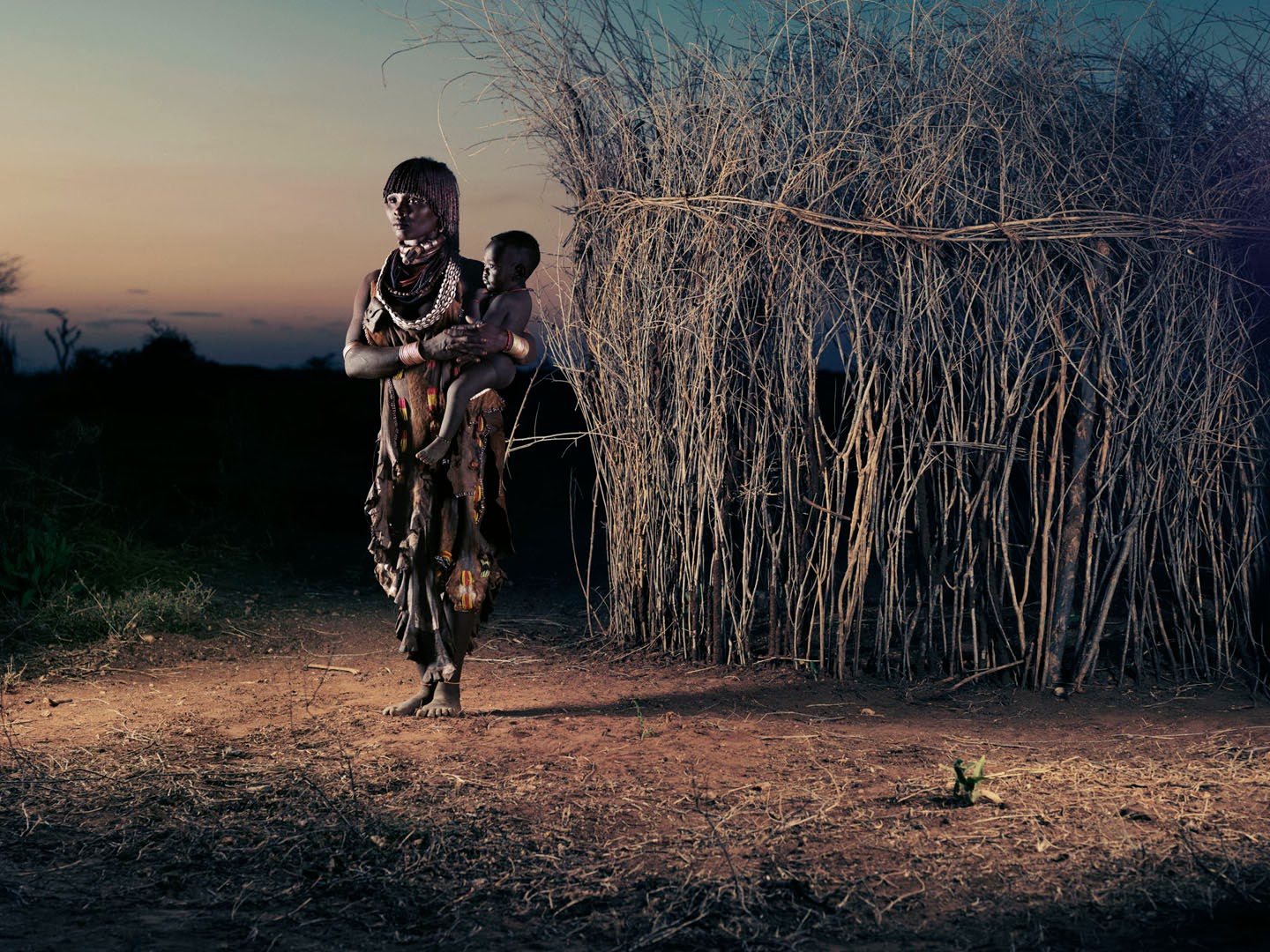
My nostalgia for African culture had me doing a little web-browsing, which brought me to the website of photographer Sam Barker.  He mainly does commercial stuff, all glossy and dramatic.  Some of his photos reminded me of South Sudan.  I thought I'd share some favorites.  


This particular series is on the Omo Valley in Ethiopia.  The people groups in this region have become the poster children for what Western society deems "Africa."  Of course, these groups of people don't dress in the full-on paint and headdresses all the time; however, it is a great look at the richness of a very distinct part of African culture.


A lot of these staged shots could take away the authenticity for the viewer.  Still, Barker succeeds in taking beautiful shots.  (He is a commercial photographer, after all.) Also, like all good photographers, his shots give me a story, leaving me wanting to find out more about the lives of these particular people.    


Tuesday, November 26, 2013

Calling All Givers!!


 This holiday season, please consider donating to the Sudan Ministry Vehicle Fund.  This is where the majority of our needed costs are found.  Currently, our team is in need of two ministry vehicles.  One will help the Bishop of Mundri travel around to various Dioceses.  Some of the communities that Bishop Bismark needs to reach are hours away and on nearly impassable roads.  Nevertheless, he is always willing to hit the road and minister in towns and villages of all shapes and sizes.  This man gets a LOT of requests to help the spiritually, emotionally, and physically broken people of South Sudan, and he does his best to help them all.


      Our other vehicle is needed merely to fit the numbers in our growing team!  We have some couples and one large family joining us in coming months.  One vehicle will not be enough to hold us.  Although our team mainly travels around town on bicycle, we regularly get requests from further out of town to help with church services, encourage families, and take people to the hospital.
      The total cost for both of these vehicles is a whopping $95,000.  Please consider making a generous one time donation.  Don't forget, this is tax-exemptable!


Your giving will be an invaluable help towards the people of Mundri, South Sudan


To help donate towards the cost of these vehicles you can 
donate online here

or write a check to 
World Harvest Mission
Donations Processing Center
PO Box 1244
Albert Lee, MN 56007-1244

write in memo line: S.S. Vehicle Fund- 19201


Tuesday, October 29, 2013

Ria


          What’s in a name? Here in South Sudan, a name means much, and each person has three.  It tells how you came into this world and how your mother will remember you.  It gives your father’s name and your tribe’s religious history.  Your three names follow you like a shadow, whispering family stories of dead siblings, beloved pastors, difficult births, and earth-shaking storms.  These stories of self greet all of those with whom you come into contact.  I have been able to meet people with names like Sesame, Sunshine, Wind, Circle, Tired, Deny, Problem, and even Trash. (These names are all spoken in the Moru language, of course.)  My friends here are always surprised when I tell them that “Jennifer” doesn’t really mean anything in English today.  I shamefully admit that people from America tend to pick names that just sound pretty—further proving the idea that Kawajas completely ignore history for the sake of vanity.  (This is no knock to my parents, by the way.  I love my name, “Jennifer,” and my middle name, “Marie,” is from my grandmother.)  However, the Moru people here take it a bit further.  Luckily for those of us here on the World Harvest Team, we have Sudanese friends who want to invite us into their culture of captivating names. 
            Last year, my friends at the Kotobi Institute for Teacher Education (KITE) decided I had gone long enough without taking a Moru name.  Granted, I can’t speak a lick of Moru, only some pigeon Arabic; however, it’s not your language proficiency that warrants a second name.  My friends at KITE care for me like a sister, and they wanted me to feel welcomed into their community—so they gave me the name that they thought was most fitting—Ria.  In Moru, it means, “joy.”  They told me it was a no-brainer, since I am always smiling.  They said that I have a happy way about me and never appear angry or upset.  I was surprised by how unanimous their belief was; I am always a nervous wreck each Friday when I show up to teach (a combination of stress from last minute lesson preparations and difficult driving).  I didn’t even notice I smiled that much. 
            My Kotobi friends haven’t been the only ones to agree on the “Ria” thing.  In one of his classic quotes, Grant Lazarus (ECS Education Coordinator) tells me emphatically,  “Jonifa…you are always smiling…that is, uh…socialism!”  As I play with the neighbors’ dog, who nibbles at the edge of my skirt and prances around my feet, worker Simon tells me, “Ooh, you are so happy!”  I’m glad to know that people deem me a happy individual.  However, if my Moru friends had seen me in previous years, they might have decided on a much different name.  There were many times in my life when I breathed nothing but stress and fear (and didn’t know how to do any different.)  My body was weak from nerves and my general lack of direction made me prone to sleep.  Nothing seemed certain and nothing felt safe.  I owe my recent, personal heart-shift to the Lord and His gracious hand.  He has blessed me with the opportunity to do what my heart desires most— to teach English cross-culturally.  The Lord has opened the door for me to live and work in east-central Africa, biking down dusty roads onto open compounds of busy primary schools and renovated colleges, which are all trying to make improvements to go along with their newly acquired independence. 
            I am so happy here; however, I find myself realizing that this “ria” thing is conditional, based solely on circumstance.  What happens when the teacher workshop doesn’t go as smoothly as I had planned or when I have awkward interactions with people from my church.  What posture does my heart take when members of my team are in bitter argument and I feel caught in the middle?  If anything, I tend to shut down and close off myself, losing that spark of joy that comes with knowing and believing you are a beloved child of God. 
            My joy has been temperamental this past month, proving where my heart truly lies.  It has been placed on the shaky platform of earthly idols, like those of relational comfort, work, reputation, body, and success.  Setting my heart in these places puts me on an emotional rollercoaster, soaring happily (and pridefully) when things go well, and then plummeting desperately (and fearfully) when things go wrong.  I so want to be the joyful person that God has made me to be.  I want to quote the Psalms daily, saying, “I praise you, Lord, because I am fearfully and wonderfully made; your works are wonderful, I know that full well.”  I want to believe it when I sing that, “The joy of the Lord is my strength.”  Sometimes joy is a choice; and it all comes down to choosing to believe that God’s promises are true, even when my heart feels heavy and my mind begins to race.  And in those moments when I can’t choose joy—when my heart is covered with an icy layer from frozen idols, I can trust that the Holy Spirit is there to do some melting.   

As the rain and the snow come down from heaven, and do not return to it without watering the earth and making it bud and flourish, so that it yields seed for the sower and bread for the eater, so is my word that goes out from my mouth:  It will not return to me empty, but will accomplish the purpose for which I sent it.  You will go out in joy and be led forth in peace; the mountains and hills will burst into song before you, and the trees of the field will clap their hands.
-Isaiah 55:10-12     

Wednesday, September 18, 2013

Puff Addy

Hawa and some of her sibs, coming through
the compound to get water


            I was chopping onions furiously, turning my head ever so slightly to the right as to not catch a draft of the stinging fumes, when I heard Hawa’s familiar voice.  “Jonifa? Ita kweis…”  Knowing that my ever-curious (ever-loitering) thirteen-year-old neighbor didn’t merely want to know how I was doing, I put down the knife, brushed my wet hands on my skirt, and went out to see what she needed.  Expecting her to ask for some old clothes or a jerry can, I only half-listened to her, waiting for the moment when I could tell her (like I do every week) that the team only gives out items on Friday.  However, amidst her jumbled Arabic, one word stood out more clearly above the rest— “debiiba” – snake.    My ears perked up.  After listening some more, I got the gist that a big snake was in her house and she needed someone to come and kill it.  “I am scared,” she kept repeating.  I was beginning to fear that it was only Hawa and her toddler siblings there at the compound.  I called Rooney over, who was doing some handiwork for John that afternoon.  We picked up a hoe and weed slasher and set out at a brisk pace to get this snake before it slithered its way back into the bush.  
            Upon walking into the compound, I noticed that the majority of the family was there, including some young men.  Under my breath I asked Rooney, “And why are the men not trying to kill it?...”  We walked with the guys over to the snake’s location, ready to offer our services as experienced, brave, snake-killing machines.  Our guides stopped about fifteen feet from the entrance of the tukul, not daring to go an inch closer.  Rooney and I both moved closer, squinting into the dark hut to see the snake.  As my eyes adjusted to see it, I gave a guttural shriek and turned away covering my mouth, like some damsel in an old horror film.  The thing was huge.  It was like python-huge, like something I’ve only seen in books or on television.  I don’t tend to be very scared of snakes; however, this was something I did not want to see coiled up inside my neighbor’s bedroom—it was just too unnatural.  Of course, I am in Africa, so it kind of comes with the territory.
            I quickly decided that the tools we had were not nearly long enough to reach this thing from a safe distance, so I ran back to get the 20-foot hoe, which has been used in the past by “Snake Killah” Melissa to behead snakes.  In typical African fashion, I returned to the neighbor’s home with three extra people in tow.  (The Bishop’s teenage sons had just killed their own snake twenty minutes prior and were eager to make another kill.)  As we trekked back to Hawa’s compound, Joseph exclaimed, “Watch out, Jack!”  Looking ahead, where I expected to see another snake, I saw Duniya, the neighbors’ little dog, trotting up to Jack.  “You are scared of the tiny dog?!”  I asked incredulously.  “That dog is crazy,” stated Jack.  Duniya is NOT crazy—merely curious and playful at times.  I couldn’t believe that, here we were, about to kill a venomous snake, and the guys were more concerned with a puppy.  However, minutes later, when the boys got a look at the chunky, spotted snake, they too shuddered and shrank back in fear.  It looked like it was going to have to be a whole group effort.
            The boys and I surrounded the tukul with our weapons of choice, ranging from bamboo poles to bricks to bows and arrows. (I personally prefer the normal sized garden hoe.  It is long enough to keep your distance, while having enough heavy metal on the end to slam down and decapitate the creature of choice.)  Joseph, Bishop’s middle child and thinker of the group, stated, “We need to create a plan.”  He was right.  Rushing at the thing with all of our weapons would only cause confusion and injury on our part.  We had little margin for error, given that the snake was a Puff Adder, the most poisonous of all the snakes in S. Sudan.  I made sure to reiterate that tidbit of information every time a boy got overzealous and wanted to get a closer look at the situation.  We didn’t need to look any closer—the situation was clear.  A puff adder was lounging on the windowsill of my neighbors’ tukul. Although deadly, Puff Adders are quite slow.  I advised the boys that whatever they chose to do would be a helpful step in slowing the snake down to a lumbering speed.  Then we could worry about making the deadly blow.    
            I stood at the back end of the hut, in case the snake decided to retreat out through the windowsill and into the bush.  We all held our breath as Hawa’s older brother brought out his trusty monkey-slaying bow and arrow and took aim.  The first shot missed and hit the thatched roof.  The second shot was spot on.  The snake dropped down, fully inside the tukul, and we all rushed around to the front to see it.  It was curled up in the back corner, under the bed.  Tough-guy-Rooney then took the reigns of the operation and began stabbing away at the thing, using the safe but sure 20-ft hoe.  It was quite a process.  The snake would torque its body around to best absorb the blows with its muscular end.  Rooney could not break the skin on the thing.  Eventually, he got some good bludgeons in and dragged the near-dead snake out into the open for a proper beheading.  I stepped up to be the one, but still couldn’t break through its neck, even when putting all of my body weight into the hoe.  Eventually, Joseph jumped up, got some air and momentum, and slammed down into the Puff Adder, taking its head clean off.  VICTORY!  Man beats Nature yet again!  Iya, Hawa’s mom, was overjoyed.  Everyone gawked over the carcass of the puff adder (which had a surprisingly short body, given how thick it was).  Joseph and Jack took the head back to their home for bragging rights and for the opportunity to torment Ferida, while she was trying to cook dinner.
    
           
When I ask Sudanese children what they fear the most, they all say “debiiba.”  I guess that’s not so different from the kids in the United States.  However, when American children think of a scary snake, it is often one from their nightmares, from the story in the picture book or on a television show.  It’s that elusive monster that someday just may crawl out of the closet and slither into your bed.  For the children here, it is a reality, but they don’t let it stop them from living their lives from day to day.  A snake is just another living thing that God has put in South Sudan.  So they accept it. And respect it.  And thank God for everyday that He wakes them up to see the sunrise and traverse across the green land to get their morning water… although they may now be watching more carefully as they walk through the tall grass.  

The Lord will keep you from all harm--
He will watch over your life.
-Psalm 121:7

Wednesday, September 4, 2013

Garden Party


          A morning of work in Fatna’s garden was long overdue.  I had been visiting her at her compound practically every Monday since February, toting with me my Arabic dictionary, some English sentences scribbled down onto folded notebook paper, and a colorful picture book for the kids.  My visits to her house had become one of the more constant parts of my shifting schedule here in Mundri.  Her home was a place where I quickly felt comfortable enough to behave as part of the family, helping grind g-nuts, prepare greens, and wash my own dishes.  The next-door children were finally becoming accustomed to seeing my white face and blazing red hair as I parked under a tree reciting Arabi– they were now coming up to me and touching the glossy pages of the book I held, talking to me in their sweet, simple Arabic.  My lessons at Fatna’s place were such a blessing that it made sense for me to pour out some of that blessing onto her family.  There seemed to be no better way to show I cared than to help out in their garden.       
            For those who aren’t aware of what African agriculture is like, each family has its own garden—sometimes shared with a couple of other families—and this garden is the top priority for these families.  They work their whole schedule around clearing, planting, weeding, and harvesting these plots.  Children will skip school, mothers will leave church early, even men will pick up a shovel to help ensure the success of the various crops planted.  Some gardens are comparable to the size of suburban horticulturist’s garden, taking over a small backyard space.  These plots tend to be right beside the family compound.  Most people, however, have a large garden that is further out into the bush.  These plots can be up to an acre in size and require a commendable amount of time to maintain.  Many people in Mundri have built small huts near these remote gardens, giving themselves a place to sleep when they spend full weekends doing digging and planting.  These gardens are a community project and people are expected to help on their neighbors’ land if they want to receive help in return.  Fatna and Yogo’s garden is a smaller one on their compound in town, but it still requires a lot of work.
            Their compound is just off of the main road, down a steep, short hill.  Surrounding the living space are the gardens of maize, pede pede, and g-nuts.  I found, a couple of weeks ago, that the location of these gardens, while convenient, has proved to be problematic.  The accumulation of rain water floods downhill off the main road and settles into their gardens, swamping vegetation, mucking up the soil, and spilling over into their huts and living space.  I found one tukul slanting over, about to collapse, while streams traversed the compound.  I squirmed to see little babies splash around in these mucky streams and quickly diverted their attention when I saw them attempting to put some of the water in their mouths.  Everyone on Fatna’s compound was suffering with a painful, relentless cough, a result from having to live in such a swampy environment.  My first thought was about how Fatna would have exams the next week and she didn’t need any distractions while being tested.  Then, my mind turned toward the garden.  The recent onslaught of rain had flooded the g-nut garden; if the crops weren’t taken out of the heavy ground soon, they would rot and the family’s major source of protein for the year would be gone. 
            I showed up around 9:30 on Saturday morning and apologized for being 30 minutes late; of course, no one noticed or cared.  They were just happy to have me there to help.  The neighborhood kids smiled and watched as “Jonifa Ria” set out to be a “big help.”  As soon as I sat in my chair, it sunk over in the mud and I fell back onto the ground.   Nothing like some physical humor to make people laugh even more at the kawaja.  Yogo did the hard work of cutting the plant out of the soaking ground.  I merely took piles of branches and searched out the healthy g-nuts to pick and toss into the bucket.  I got into a steady rhythm, remembering to use the proper form like I had learned during last year’s harvest.  (Hold the branch in your left hand and pick quickly with your right.  Fill up your hand completely before tossing the g-nuts into the bucket.) Yogo’s older mother (who has to be at least 80 years old) had been there since dawn, sitting in a broken-down wooden chair and picking nuts like a champion.  She watched me to make sure I got the technique down, and then proceeded to give me ample verbal affirmations of, “Aiwa! Aiwa!” and “Ita arif tamaam!”
            After a mere hour of work, the sun came out from behind the low-hanging clouds and bore down upon our heads in full force.  The women decided I was too delicate for the sun and moved me inside a tukul to wait to be served a meal.  So soon? What about all the good work I was going to do?!  Was I not an important part of the garden work force?! I was disappointed to be treated like a special guest when I felt like part of the family; however, you really can’t reason with the stubborn hospitality of a Moru woman.  Fatna and I ate a delicious snack of chopped tomato and onion on bread.  Then we sat under the shade and chatted with the rest of the women on break.  Doe-eyed Dani (Yogo’s  two-year-old grandson) was in town from Juba and was running around with his long time buddy Ataba (one of the most flirty little toddlers in Mundri).  It was thoroughly entertaining to watch the two of them play with whatever random objects they could find.  They particularly liked stretching out a long rubber band and toting it over their shoulders like strong men.
            I was soon begging the ladies to let me continue working.  They only allowed it under the condition that I pick g-nuts in a shady spot.  I sat with Yogo’s uma (mom) and continued with the task, occasionally stopping to say a phrase or two in Arabic.  When the work for the day was done, I sat with Fatna and listened to her read from one of my picture books.  It was encouraging to hear an increase in her speed and fluidity, and I was happy to hear her say that English was one of her stronger subjects.  I’m not too worried about Fatna—her mother keeps her accountable to her schoolwork, and she has a sensible head on her shoulders.  However, I still get that protective, older sister mentality whenever a teenage boy passes through the compound and lingers longer than necessary. 
            I guess I just need to trust that God has it all under control.  I need to believe that He will keep my teenage friends in His hands, that He will protect and provide for my neighbors.  He will use me when I show up, but it will be He who does the work—not I.  How many times do I need to remind myself that I’m not the hero in the story?  If anyone, I’m the weak, helpless side character who is repeatedly blessed by the kindness of others.  This couldn’t be more apparent than when I left Fatna’s house that day with a gift bag of g-nuts two times the size of the amount I actually picked.  


"A friend loves at all times..."
-Proverbs 17:17

Tuesday, August 20, 2013

Sponsor a Teacher!


Thanks to all who donated a Something Beautiful book
for our August training!  The teachers loved them!


With the August teacher training just recently behind us, Bethany, Melissa, and I are already planning the next training for October.  We will have the same teacher-participants from the previous training and will build off of skills from that week.  We are still in the process of deciding the theme of the training, but we know the Sudanese teachers will be enthusiastic and will rise to every challenge we place before them.  This is undoubtedly the most interactive and thoughtful group we’ve had to date!  

To ensure that we will have the proper supplies and resources for each of our teachers this fall, the educational ministry in Mundri is setting up a sponsorship program for each participant.  Join us in helping a South Sudanese teacher attend our upcoming training! 


Teachers to Sponsor:

Lextion Ruba (back row, far left): Lextion teaches at Lendrewa Primary School.  He is one of the more shy students and is less confident with his English, but he is always brave to raise his hand and give an answer (particularly when reviewing vocabulary).  Unfortunately, he did not get to receive his certificate on the final day of training, because he was stung by a scorpion that morning!  (Oh, the things that cause a sick day in Africa…)  

Rachel Yunia (back row, blue dress): Rachel teaches Arabic at Mundri II.  She is a pro at the language and can even write in it!  She was one of the more quiet students, always sitting back and observing while the others chattered away.

Mashiri Aggrey (back row, yellow shirt):  Mashiri has much experience in education, having lived in Khartoum and Juba.  He towered over the other teachers and was aptly given the nickname “big fish” after his role in a class drama.  I was grateful for all of his insightful comments during group discussions throughout the week.  He is currently headmaster at Okari Primary School, which is struggling to maintain a strong student population. 

Julius Nbatala Nyere (back row, black shirt): Julius teaches at Gullu I Primary.  He is a math teacher and a bonafide riddle king.  He was the first to answer many of the “brain teasers” we put on the board throughout the week.  He understands the importance of having students use problem solving skills in a real world context. 

Victoria Mayiba Enosa (back row, purple dress):  Victoria teaches Nursery at Gyanga Primary School.  She was an extremely attentive student and sat in the front row with her bff Nabeita. 

Nebeita Dawa Eliaba (back row, green headdress):  Nebeita teaches Nursery at Miri Magya Primary School.  She is undoubtedly the classclown, with her dry sense of humor and tall, lanky body that is usually standing at the front of the classroom, performing in dramas and demonstrations. 

Linda Nichol Yofam (front row, white T-shirt):  Linda is another well-experienced teacher who was so kind as to indulge us crazy kawajas in our planned group activities and games.  She teaches at Gyanga Primary School.

Mary Nadi Wilson (front row, green dress):  This group of participants had a lot of overachievers, but Mary Nadi takes the cake!  She was always one of the first to volunteer, provide an answer, read in English, and speak during closing ceremonies.  She loves catchy visuals, and I have seen them first hand in her nursery class at Mundri II.  Off the record, she is this teacher’s pet. 

Linda Malia Otiniel (front row, pink shirt):  Linda, like Mary, was another strong returning participant who teaches nursery school.  She was a hard worker and even had to cut out of our workshops early each day to power walk over to her afternoon classes. She teaches at Hai Malakal Primary.

Cecilia Enaba Gadi (front row, black and white dress):  Cecilia was a new participant who impressed me more and more as the week went on.  She had great English skills and was noticeably focused during each lesson, soaking up as much new information as possible. She teaches at Mundri Adventist Primary School.

John Samuel Manya (front row, striped shirt):  John was the youngest of the group.  He volunteers at Jarangala Primary School and has the least experience out of the participants.  He surprised me with his strong memory for facts and vocabulary, and was good to always raise a hand during daily review, despite his shyness and English speaking difficulties.       

Elizabeth Silivan (front row, black shirt):  It was a joy to teach each day and see her bright face smiling from the back of the classroom.  She impressed us all on the final day of training when she presented her own model lesson incorporating graphic organizers like we had discussed earlier in the week!  Talk about applying what you’ve learned!  She teaches at Miri Kalanga Primary. 

Alison Aboud Kayanga (front row, blue shirt):  This man really gave some spice to the week, freely sharing his opinions, thoughtful ideas, and wise-guy comments.  The best thing about Alison is that, despite all of his experience, he doesn’t take himself too seriously.  I’d love to see this man in the classroom.  He teaches at Hai Malakal Primary. 

Jesselina Kyila Patrick (front row, gold dress):  Jesselina was another one of our super-sweet, hard-working, ever polite, nursery school teachers.  She had a quiet demeanor, but showed intense focus and concern for education.  She teaches at Baya Primary.    


The cost to put one of these teachers through a week-long training is $50.  To give, go to S. Sudan Edu. Fund and leave a comment about which particular teacher you'd like to sponsor.  Thank you so much for your generosity!